Kittl Review 2026: Is This AI Design Tool Worth $120?
Most design tools compete on template count. Kittl competes on typography. That is a deliberate choice — and it changes everything about who this tool is actually for.
Looking for more AI tools? Explore 500+ ranked options at top10k.com before deciding.
After 30 days of daily use across logo creation, print-on-demand mockups, and AI image generation, I can tell you that Kittl's typography engine — layered text effects, anchor point manipulation, clipping masks — still does things Canva simply cannot. For a POD seller building Etsy listings, a solopreneur producing apparel graphics, or a brand designer who lives in the browser, that gap is real. But the platform has also grown far beyond text: 26+ AI image models, 3–15 second video generation via Kling and xAI, CMYK print export, and a redesigned home hub all arrived in early 2026. Whether that expansion justifies $120 per year depends almost entirely on your workflow. This review breaks down every pricing tier, the token economics competitors ignore, and the honest cases where Canva still wins.
Ready to test it yourself? Start your free Kittl trial at https://nhamvu.com/?aff=kittl
What Is Kittl and Who Is It For?
Kittl is a browser-based, vector-native graphic design platform built around typography-driven creative assets. It launched with a clear identity: hand-crafted design quality for people who need logos, posters, merchandise graphics, and branded collateral — not marketing decks or social media carousels.
The platform sits at an interesting intersection. It is more accessible than Adobe Illustrator, more design-precise than Canva, and more versatile than single-purpose logo generators like Looka. As of 2026, Kittl reports 5 million global users — a small base compared to Canva's 150 million, but intentionally specialist-focused rather than mass-market.
Core use cases where Kittl excels:
- Logo and brand identity design — vector output, layered type effects, and AI-assisted generation with on-canvas editing
- Print-on-demand merchandise — apparel graphics, poster art, sticker sheets for Etsy and Merch by Amazon
- Mockup creation — product visualization for online stores without leaving the browser
- Branded collateral — business cards, packaging labels, event signage
Who struggles with Kittl:
- Marketers who need volume social content fast (Canva is faster)
- Professionals deep in Adobe Creative Cloud who need Illustrator-native file compatibility
- Teams needing robust real-time collaboration (Kittl's Business tier handles this, but the standard plans are single-user-oriented)
The short version: Kittl is a designer's tool that non-designers can use. Canva is a marketer's tool that designers tolerate.
Kittl Pricing 2026 (Free, Pro, Expert Breakdown)
Kittl uses three publicly priced tiers plus a Business tier for agencies. Annual billing gives a 20% discount across the board.
| Plan | Monthly Billing | Annual Billing | Storage | AI Tokens/mo |
|---|---|---|---|---|
| Free | $0 | $0 | Limited | 100 |
| Pro | $15/mo | $10/mo ($120/yr) | 10 GB | 2,000 |
| Expert | $30/mo | $24/mo ($288/yr) | 100 GB | 6,000 |
| Business | Contact sales | Contact sales | Custom | Custom |
Annual savings: Pro saves ~$36/yr over monthly. Expert saves ~$72/yr.
The critical detail most reviews skip: AI tokens are not equal across operations. A single high-resolution AI image generation typically costs more tokens than a background removal. Light users on Pro (2,000/mo) will be fine; heavy AI generators — running multiple design concepts daily — will hit the ceiling before month-end.
Token consumption guide (approximate):
| Action | Estimated Token Cost |
|---|---|
| AI image generation (standard) | 15–30 tokens |
| AI image generation (high-res) | 30–60 tokens |
| Background removal | 5–10 tokens |
| AI vectorization | 10–20 tokens |
| Video clip generation (3–15s) | 60–120 tokens |
At those rates, 100 Free-plan tokens = roughly 3–6 AI image generations. The free plan is for evaluation, not production. Pro's 2,000 tokens supports approximately 65–130 standard image generations per month — workable for moderate use.
Claim your Kittl Pro or Expert plan at https://nhamvu.com/?aff=kittl
Kittl Free Plan — What You Actually Get (and Don't)
The free tier is a genuine evaluation tool, not a crippled demo — with one hard wall.
What you get:
- Full access to the design canvas and typography engine
- 100 AI tokens per month
- Access to Kittl's template library (curated subset)
- Background remover, basic AI features
- Browser-based editing with no software install
What you do not get:
- Export above 800px at 72 DPI — this disqualifies free-plan work for any print application, POD listing, or commercial product where resolution matters
- CMYK export (Pro+ only)
- Unlimited project storage
- Commercial licensing at scale
The 800px export ceiling is the real barrier. For comparison, POD platforms like Printful require minimum 150 DPI at print size — a typical 12×16 inch design needs at least 1800×2400 pixels. The free plan's 800px max puts it below even basic Etsy listing quality for merch. If you are testing Kittl for any paid design work, you need Pro.
For pure learning — exploring the typography controls, understanding the AI generation workflow, auditing template quality before buying — the free tier is completely adequate.
Key Features: AI Logo, Typography, Vector Export
Typography Engine
This is Kittl's founding advantage and still its strongest differentiator. Text effects in Kittl go well beyond what any Canva competitor offers at this price point:
- Anchor point manipulation for precise text path control
- Layerable effects: shadows, outlines, textures, gradients — stackable, not mutually exclusive
- Text bending and warping with visual handles (not just preset arcs)
- Clipping masks that apply image fills to individual letterforms
For a t-shirt designer, the difference between Kittl and Canva typography is not cosmetic — it determines whether a design looks premium or amateur when printed.
AI Image Generation (26+ Models)
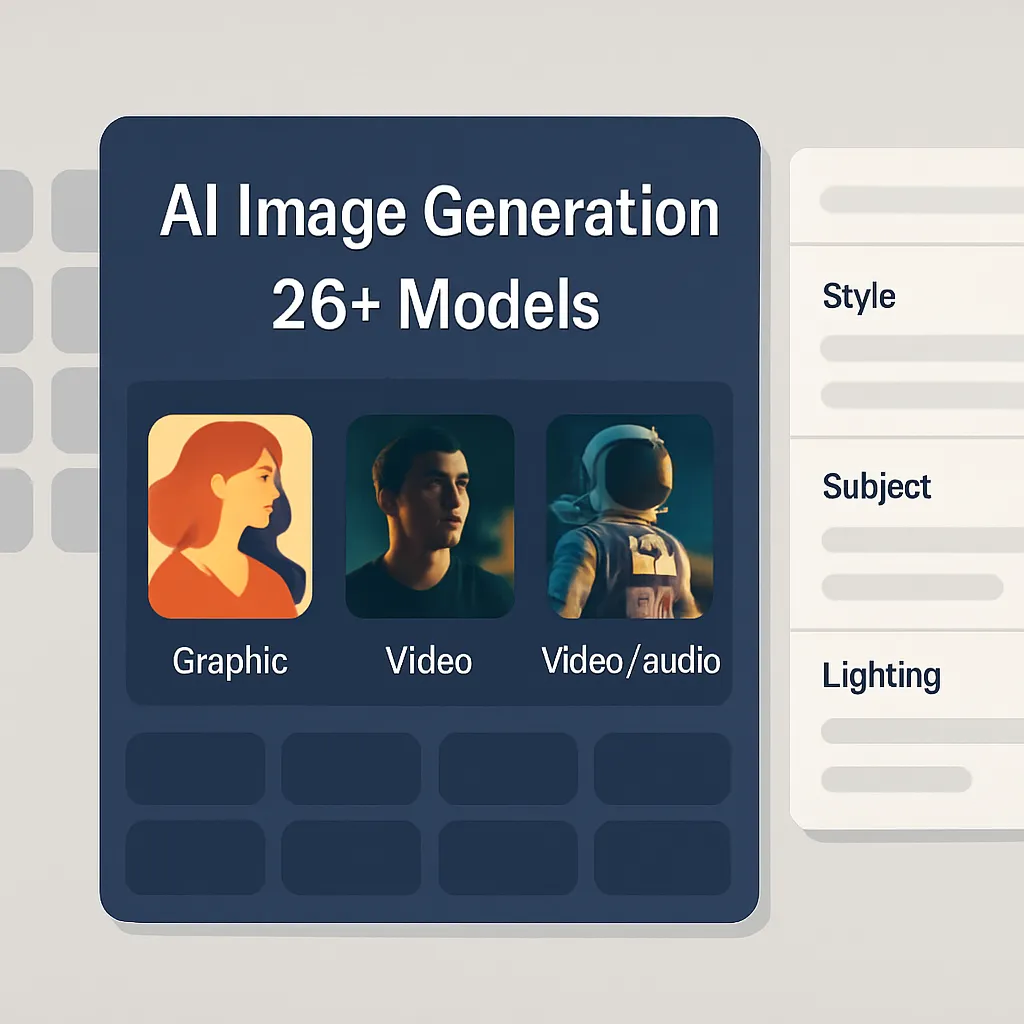
Kittl's AI suite as of 2026 includes 26+ models, notable among them Recraft V4 (graphic design-optimized for vector-friendly outputs), Kling (cinematic video generation), and xAI multimodal (video with audio support). This model diversity is a genuine differentiator: rather than a single AI engine processing every request, users can select the model appropriate for their output type.
The Prompt Builder tool deserves mention — a visual interface for specifying style, perspective, lighting, and effects before generating. This reduces iteration cycles and token waste compared to prompt-and-pray approaches.
AI Sets Generator produces batches of related graphics from a single prompt — useful for building cohesive sticker packs or branded illustration sets without individually prompting each asset.
2026 Video Generation
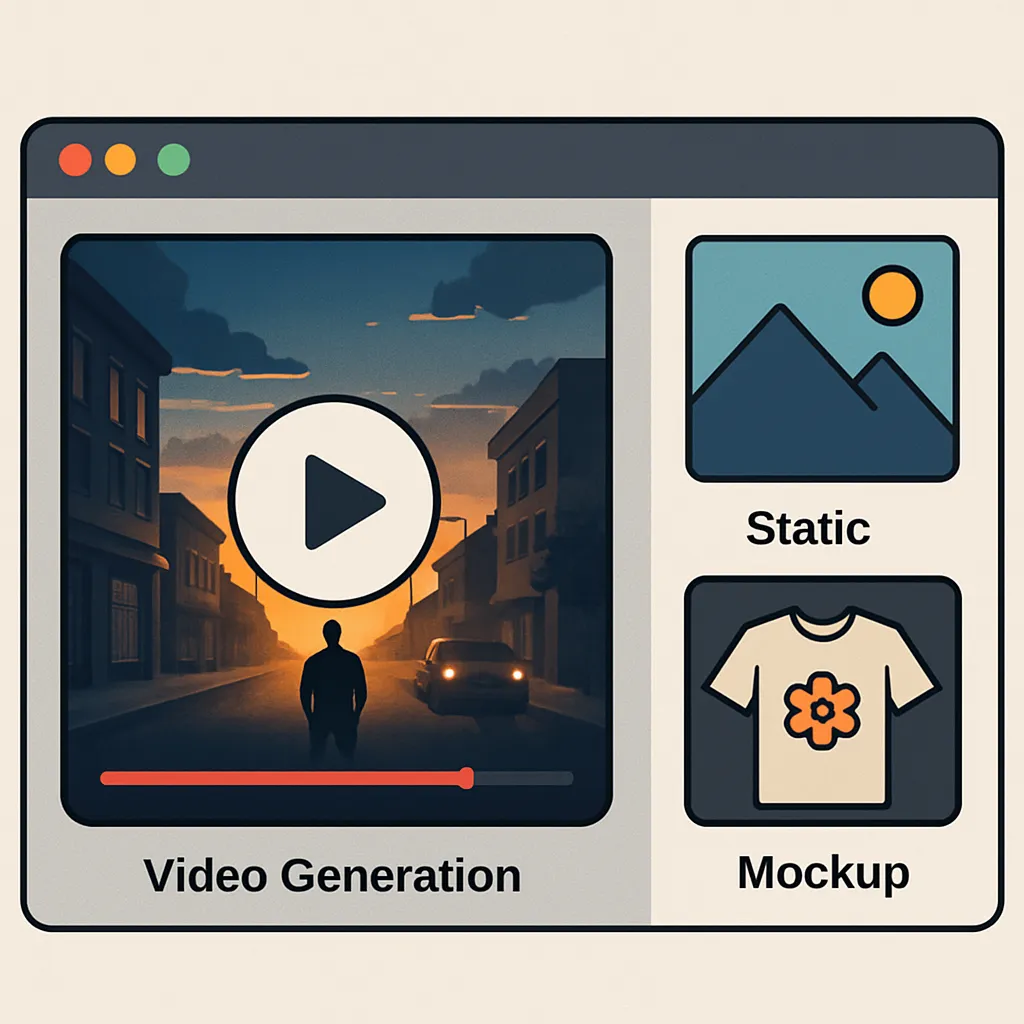
Kittl now generates 3–15 second video clips via Kling and xAI model integrations — cinematic motion content alongside static designs and mockups, all within the same canvas. This arrived in early 2026 and positions Kittl to compete with Canva's video capabilities. The caveat: video clips consume significantly more tokens than static image generation (see token table above), making them Expert-plan territory in practice.
Vector Export and CMYK
The AI Vectorizer converts raster images to native SVG format — critical for logo work and print production. CMYK export (Pro+) enables professional print workflows without a round-trip through Illustrator. Combined, these features make Kittl a credible end-to-end tool for designers who used to need both a browser-based design tool and a dedicated vector editor.
For a broader comparison of AI logo generators, see top10k.com/ai-logo-generators.
Kittl vs Canva — Honest Side-by-Side
| Feature | Kittl | Canva |
|---|---|---|
| Typography depth | Excellent — layered effects, anchor control | Basic — limited text styling |
| Template volume | Smaller library, higher design quality | 2.2M+ templates, variable quality |
| AI image models | 26+ selectable models | Single Magic Studio AI engine |
| Video generation | 3–15s via Kling/xAI (2026) | Yes, more mature feature |
| Collaboration | Limited (standard plans) | Strong real-time collaboration |
| Export quality | Vector SVG, CMYK, up to 4K (paid) | PNG/PDF, no CMYK, limited vector |
| AI pricing model | Token-based (consumption limits) | Included in subscription |
| Free plan export | 800px max | Up to 1080px |
| Primary audience | Designers, POD sellers | Marketers, social media creators |
| Starting price | $10/mo (annual) | ~$15/mo (annual) |
Where Kittl wins: any workflow requiring precise typography, vector output, or CMYK printing. Kittl is specifically the right tool when the design needs to look like it was made by a professional — for merchandise, brand identity, or print products.
Where Canva wins: volume social content, team collaboration, breadth of non-design templates (presentations, documents, whiteboards), and any use case where "unlimited" feels better than "precise."
The cleanest summary: Kittl for designers, Canva for marketers. Choosing based on primary workflow avoids buyer's remorse on both platforms. For a full list of Canva alternatives evaluated side-by-side, visit top10k.com.
Comparing alternatives? Discover the full ranked list on https://top10k.com before committing to any single platform.
Kittl for Print-on-Demand Sellers (Etsy, Merch by Amazon)
POD is where Kittl's design DNA translates most directly into business value.
Why POD sellers specifically favor Kittl:
The commercial license included with paid plans covers up to 500,000 reproductions per design — more than sufficient for Etsy sellers and Merch by Amazon participants at any realistic sales volume. This is frequently underexplained in competitor reviews and is a meaningful reason to choose Kittl over free or freemium tools with unclear licensing terms.
Practical POD workflow on Kittl:
- Start from a typography-led template or blank canvas
- Apply text effects, illustrations, or AI-generated graphics
- Use the mockup generator to visualize the design on apparel or product
- Export at print resolution (Pro+) as PNG with transparent background or CMYK-ready PDF
- Upload directly to Printful, Printify, Merch by Amazon, or Redbubble
The mockup generation step is particularly efficient — Kittl generates product mockups in-platform rather than requiring a third-party mockup service, reducing the tool-switching overhead that eats time in high-volume POD operations.
The honest limitation for POD: the smaller template library. Canva has 2.2 million templates; Kittl has a curated but notably smaller catalog. Sellers who rely on high template volume to quickly spin up new designs will feel this constraint. Kittl's strengths reward designers who want to build from a strong foundation and customize extensively — not copy-paste template factories.
Revenue math for POD sellers: If Kittl Pro ($120/yr) enables even 5–10 additional design approvals per month on Merch by Amazon at $2–4 royalty each, the tool pays for itself within the first month. The calculus is favorable for active POD operations.
Kittl vs Looka vs Adobe Express
Beyond Canva, two other tools frequently surface in the same evaluation process.
Kittl vs Looka
Looka is a logo-generation-first tool: enter a brand name, select preferences, receive a polished brand kit (logo, color palette, business card) in minutes. Kittl requires more manual involvement but delivers more control.
Choose Looka if: you need a complete brand identity delivered quickly, with minimal design decisions required. Looka's full brand kit output is difficult to match for speed.
Choose Kittl if: you want to own the design process end-to-end, edit every element after generation, and produce ongoing design assets (not just a one-time logo package). Kittl also handles mockups, merchandise, and ongoing content — Looka does not.
Kittl vs Adobe Express
Adobe Express sits between Canva (beginner-friendly) and Illustrator (professional). Its Firefly AI integration provides commercial-ready outputs with IP indemnification — a meaningful advantage for enterprise buyers.
Choose Adobe Express if: you are embedded in the Adobe Creative Cloud ecosystem, need Firefly's commercial IP guarantee, or need the broader Adobe feature set.
Choose Kittl if: you prioritize typography depth, native vector editing, and AI model selection over ecosystem integration. Kittl's typography controls exceed Adobe Express at this price point; Firefly AI quality is competitive but model diversity is narrower.
Pros and Cons After 30 Days of Real Use
Pros
- Typography engine is genuinely best-in-class at sub-$30/month pricing — layered effects, anchor control, and text warping unavailable elsewhere at this tier
- 26+ AI models with user selection — granular control over generation output vs single-engine competitors
- CMYK and vector export on paid plans — covers professional print workflows without additional software
- Commercial license up to 500K reproductions — clearly POD-ready
- In-platform mockup generation — reduces tool-switching in merchandise workflows
- 2026 video generation (3–15s via Kling + xAI) — meaningful capability addition
- Actively developed — multiple product updates shipped in Feb–Mar 2026 alone
- Browser-based, no install required — works on any OS
Cons
- Token system creates friction — free plan (100 tokens) is essentially non-functional for production; Pro users (2,000/mo) need budget awareness; heavy AI generators will cap out
- Smaller template library — Kittl's catalog is curated, not comprehensive; volume-focused designers will feel the gap vs Canva's 2.2M templates
- Collaboration is limited on standard plans — not a multi-user tool without upgrading to Business
- Storage caps are tight — Pro (10 GB) and Expert (100 GB) are real constraints for high-volume asset creation
- Not a Canva replacement for everything — social media carousels, presentations, documents: Canva does these better
- Layer management UX can be unintuitive for experienced Illustrator users — some pro-level workflow expectations are not met
Top 5 Kittl Alternatives in 2026
If Kittl is not the right fit after the free trial, these are the strongest alternatives by use case:
- Canva — best for volume social content, presentations, team collaboration. More templates, weaker typography. Free plan is genuinely usable.
- Adobe Express — best for Creative Cloud users who need Firefly AI's commercial IP guarantee. More expensive at full Adobe suite pricing but bundled if you already pay for CC.
- Looka — best for fast brand identity creation (logo + color palette + business card in one session). Not suited for ongoing design work.
- Recraft — best for vector-first AI generation if Kittl's token pricing feels restrictive. Recraft V4 is actually one of Kittl's underlying AI models, available standalone.
- Placeit — best for POD mockup generation specifically. Narrower feature set than Kittl but mockup library is extensive; works well alongside any design tool.
Who Should (and Shouldn't) Buy Kittl
Buy Kittl Pro ($120/yr) if:
- You run an Etsy, Redbubble, or Merch by Amazon store and produce apparel or poster designs regularly
- You are a solopreneur or freelancer creating logos, brand assets, or merchandise graphics for clients
- Typography precision matters to your output — you have been frustrated by Canva's text limitations
- You want native vector export and CMYK print capability without paying for an Adobe Creative Cloud subscription
- You generate a moderate volume of AI designs (under ~100–130 per month) and want model selection control
Upgrade to Expert ($288/yr) if:
- You generate AI designs daily or use video generation — 6,000 tokens/mo vs 2,000 is the primary differentiator
- You need 100 GB storage vs Pro's 10 GB
- You run unlimited projects across multiple client accounts
- The $14/mo difference translates to clear workflow ROI (roughly: if you bill even one extra hour per month using Expert features, the upgrade pays for itself)
Skip Kittl if:
- Your primary output is social media content — Canva's template volume and speed wins for this use case
- You need strong team collaboration features at the standard tier pricing
- You are a print professional who lives in Adobe Illustrator — Kittl's SVG export quality is good, not Illustrator-native
- You just need a one-time logo — Looka delivers a full brand kit faster for that specific task
FAQ
Is Kittl better than Canva for logos?
For logo design specifically, yes. Kittl's typography controls — layerable effects, anchor point manipulation, text warping — produce logo-quality output that Canva's basic text tools cannot match. Canva is faster for everything else. If your primary goal is logo and brand identity design, Kittl is the stronger choice.
Can I use Kittl free plan commercially?
The free plan's commercial use terms are limited, and its 800px export ceiling makes it unsuitable for most commercial print applications. Paid plans (Pro and above) include a commercial license covering up to 500,000 reproductions — sufficient for Etsy sellers, Merch by Amazon, and most small business merchandise.
How much does Kittl Pro cost in 2026?
Kittl Pro is $15/month on monthly billing, or $10/month effective ($120/year) on annual billing. Annual billing saves approximately $36 compared to paying month-to-month.
Does Kittl export vector SVG files?
Yes. Kittl's AI Vectorizer converts raster images to native SVG, and the platform's design canvas is vector-native. SVG export is available on paid plans. Experienced Illustrator users should verify that SVG complexity meets their specific workflow requirements before fully migrating.
Is Kittl good for print-on-demand sellers?
Yes, it is one of the stronger purpose-built options for POD. Transparent background PNG export, CMYK-ready PDF, in-platform mockup generation, and a 500K commercial reproduction license collectively make Kittl well-suited for Etsy and Merch by Amazon workflows.
What are AI tokens in Kittl and how many do I need?
Tokens are Kittl's AI generation currency. Free plan includes 100/month, Pro includes 2,000/month, Expert includes 6,000/month. A standard AI image generation costs approximately 15–60 tokens depending on resolution; video generation costs significantly more (60–120 tokens per clip). Moderate users generating 1–5 designs per day will fit within Pro's 2,000 token allocation.
What's the difference between Kittl Pro and Expert plans?
Three primary differences: AI tokens (2,000 vs 6,000/mo), storage (10 GB vs 100 GB), and unlimited projects (Expert only). If you generate AI content heavily, need large project storage, or manage multiple client accounts, Expert is the logical choice. Casual to moderate users get full functionality from Pro.
Is Kittl safe for selling on Etsy / Redbubble / Amazon Merch?
Yes, paid plan commercial licenses cover up to 500,000 reproductions per design. This covers the realistic sales volumes of virtually all Etsy and Merch by Amazon sellers. Verify platform-specific requirements (Merch by Amazon has its own content guidelines independent of your design tool's license terms).
Does Kittl have a desktop app or only browser?
Kittl is browser-only as of 2026 — no desktop app for Windows, macOS, or Linux. The web app is fully featured and works across all major browsers without plugins. An internet connection is required for all features including AI generation.
Can Kittl replace Adobe Illustrator?
For most POD sellers and brand designers: partially yes, fully no. Kittl covers logo design, typography-based graphics, vector export, and CMYK printing adequately. It does not replicate Illustrator's node-level bezier editing, advanced path operations, or plugin ecosystem. Designers who rely on Illustrator's pen tool precision will still need Illustrator for complex vector work.
Final Verdict + Best Way to Try Kittl Free
Overall Score: 4.3 / 5
Kittl earns its score on the strength of a genuinely differentiated typography engine, meaningful AI model selection, vector and CMYK export quality, and a solid 2026 update cadence. The token system is the platform's most legitimate friction point — it creates a mental overhead that Canva's flat-rate pricing avoids, and free plan users will hit the wall quickly. The smaller template library is a real limitation for volume-focused creators.
Verdict by user type:
- POD seller (Etsy/Merch by Amazon): Strong buy at Pro ($120/yr). Typography quality + commercial licensing + mockup generation = direct workflow value.
- Freelance brand/logo designer: Strong buy. Typography and vector capabilities justify the price vs Canva alone.
- Social media content creator: Skip. Canva is faster and better stocked for this use case.
- Marketing team: Consider only if design quality output — not volume — is the primary need. Collaboration limits may require Business tier.
- Hobbyist/occasional designer: Start with free tier, upgrade to Pro only if you hit export or token limits on real projects.
The best way to evaluate Kittl is to run a real project through the free tier — not just browse templates. Build a logo, export it, and test the typography engine against something you are currently producing in Canva or another tool. The quality difference either justifies the upgrade immediately, or it does not.
Start your free Kittl account and test the typography engine: https://nhamvu.com/?aff=kittl
For a broader look at AI tools across every category, visit top10k.com to explore the full collection.
Ready to Try Kittl?
Start with the free plan and experience the difference AI makes in your workflow.
Get Started Free →